
This post may contain affiliate links. You can find the full disclosure here.
How did people survive the great depression? And what can we learn from people who survived the Great Depression? I'll share with you some saving money + Great Depression survival tips.
Have you ever met someone who was alive during the Great Depression? They are changed people.
The Great Depression left a great impression on their thoughts, their styles, and their frugal habits.
Many of these survivors of the Great Depression hoard money, became pack rats, and in general have trouble parting with anything that may possibly be of use down the road. And who can blame them?
Many people ask "How did people survive the Great Depression"?
I wonder how many times saving the ends of a loaf of bread or scraping the mold off of a brick of cheese meant the difference between eating and going hungry.
Great Depression Survival Stories
Before I even started researching for this article, I knew the perfect Great Depression story to share (because it's from my family).
My grandfather was born in 1928 and grew into a young boy in the aftermath of the US economic collapse.
Growing up in the Great Depression, my Pop-pop remembers his parents opening up our hay barn for random people to sleep in on cold winter nights.
He also remembers that he and his family were “not so bad off”; they were farmers during the Great Depression, so they had the land and the knowledge to grow most of the food they consumed (you can see the back of our barn and silo in this photo below).
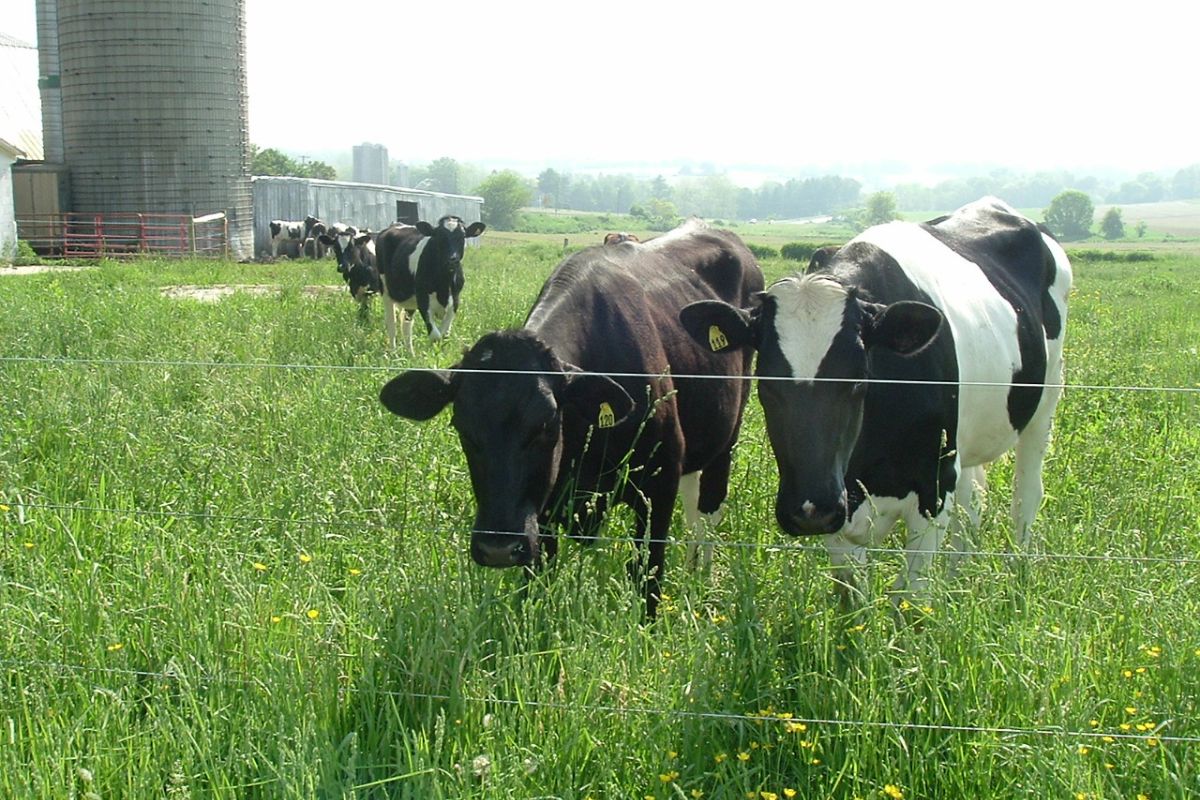
In fact, Pop-pop told me that anyone who spent the night in their barn was also given a plate of food for the night, which shows how valuable their garden truly was.
His impressionable years during a time of great financial ruin impacted the rest of his life dramatically, from his hoarding of cash and mistrust of companies and banks, to his refusal to use air conditioners and instead spend his summers in sweat-drenched muscle shirts. When he died he left an inheritance for each of his children from a measly family dairy farmer’s income.
Great Depression Living
Great Depression living – what did it look like? How did people survive? What were their daily lives like and How was life during the Great Depression?
The Great Depression to frugal people holds the same intrigue as Sedona to New Age people, which is why I've chosen this time as a small research project for myself.
I have read of the bank failures, the stock market crash, the suicides, and the Dust Bowl, all of which have been written about extensively.
I have heard Great Depression stories of bad credit loans, and how banks + people went under together during this time period. And I've seen my own grandfather's extreme frugality stemming from a childhood in the aftermath of this intense time period.
But a few burning questions of mine about this time have never fully been answered:
- How did people actually survive the Great Depression?
- What sort of frugal habits came about?
I want to learn how people made do with less and how people actually survived the day-to-day with little money.
Before I list some of the examples I found during my research, let’s put everyone into the mindset of the Depression era.
Live Like the Great Depression
Imagine this: the stock market has crashed and your money in it is gone.
The value of your home has plummeted (that may not be difficult for some to imagine, especially since many experienced this in the last Great Recession).
You see a line forming outside of several banks and begin to wonder if you should get your own money out of them and stuff it into a mattress. Your job cuts your wage by 25%, but you feel fortunate to still have one.
Except that six months later consumer demand is a speckle of what it used to be, so your job enforces furloughs. Unfortunately, the money you had set aside in your bank is not liquid at the moment due to bank issues. What do you do?
Please note: As this article is meant to be useful to everyone as both an eye-opener to how comfortable people of today actually are (even those who call themselves “frugal”, which includes myself), as well as an inspiration to maintain our frugal habits, I left out the heart-breaking and destitute acts committed by families to survive. I don’t wish to sugar coat this time period and the suffering of others, so I’d like to mention that these include eating from the garbage, eating every other day, abandoning families, living in Hoovervilles, etc.
Pssst: in a bad financial situation? You can check out my 197 Emergency Financial Assistance Resources article (broken down by nationwide resources AND resources specific to the top 10 cities).
Frugal Recipes from the Great Depression – A Collection
While researching for this article, I found it fascinating to see what people can do with simple, few ingredients, to keep food on their family's table.
The other thing I loved? Is that these recipes are all passed down from mothers, grandmothers, and cooks who actually used them during the Great Depression to keep the family going.
I found this 91-year-old woman who has a YouTube channel with frugal recipes from the Great Depression! Here's her "The Poorman's Meal" recipe, below.
Also, here's Abby Jo's grandmother's frugal great depression recipe – chocolate cream pie – that was used in the 1930s.
Pizza is so great for frugal living because you can usually make it out of what you've got on hand. I loved watching Clara make her mother's Great Depression pizza. She also gives a few tidbits about what it was like being a child during the Great Depression.
This woman's mother would make Haluski – cabbage and noodles – during the Great Depression. A whole meal for under $5!
This man's friend's grandmother used to make this Jewish Salad when she cooked for another family during the Great Depression.
Here's a Depression-era Meat Loaf recipe that was published in 1938.
Let's move on from Great Depression recipes to actual frugal living tips with a big impact on people who survived it.
How to Survive a Great Depression Tips – Frugal Living Ideas from the Depression
Wondering how to survive a great depression? Here are my specific tips on how to prepare for the next recession. And below, I've got lots of specific research on frugal living tips from people who survived the Great Depression.
- Sell Apples on the Street Corner: Pacific Northwest apple growers had a surplus of apples, and decided to sell a crate to unemployed people at $1.75 per crate. Selling the 60-72 apples on the street corner would yield $3.00, and after paying Pacific, a person could reap around $1.25.
- Roll Your Own Cigarettes
- Eat Food from the Wild: Such delicacies as blackberries, dandelions, and games were for the taking in the country but not in the city. Other people gathered corn kernels from fields and roasted them over fires, or picked fruit from people’s trees (I am not suggesting you do this).
- Substitute Other Things for Meat: Families ate more beans, macaroni and cheese, pancakes, and other gut-filling foods that were less expensive than meats. One type of meat that became popular was sardines: introducing the mashed sardine and mayonnaise sandwich.
- Family Members Work to Supplement Income: This included mowing lawns, shoveling snow, delivering newspapers, babysitting, shoe-shining, passing out ads, selling door-to-door, mining, etc.
- Repair Your Clothes with Objects around the House: Shoes were often repaired with cardboard, scotch tape became popular, and coats were lined with blankets.
- Give up Your Telephone: Telephone service declined from 20 million in 1930 to less than 17 million in 1933. Long-distance phone calls dramatically decreased.
- Postpone Life Decisions: Divorce rates dropped because people could not afford the cost, and they needed one another to survive. People postponed weddings and having children.
- Practice Out of Your Home: Doctors, dentists, and other professionals who previously rented offices instead moved their practices to their homes.
- Leave the City: A chunk of people fled the cities and went into farming instead; at least they knew they would eat.
- Give up Your Car: The bicycle has become a popular choice for transportation.
- Make Use of Your Neighbor and Vice Versa: After many people’s water was shut off, they looked to neighbors to give them buckets or pails of water for cooking, washing up, etc. People also traded clothes with neighbors.
- Live/Sleep Elsewhere: People who found themselves without a home, apartment, or bed traveled the streets, slept on other people’s couches, in other people’s garages, in barns, lived in caves, and generally slept wherever they could.
- Pawn Your Belongings
- Use Socks as Gloves
- Trade Work for Food: Can you clean houses, babysit, cook, cut hair, etc.? People would trade their services for food instead of pay.
- Join a Food Co-Op: A group would purchase bulk food at a discount and split it up.
- Move in With Other Families
But you know what? People are super creative and resourceful no matter what situation they find themselves in.
I'll show you what I'm talking about, with ways companies and people were still making money during the Great Depression.
Making Money During the Great Depression – 9 Products Popularized by the Great Depression
The Great Depression popularized many products and activities that are still ingrained in American culture today.
In general, activities that consumed hours of time for a nominal cost and allowed the participants to escape from the reality of the times were the ones that gained in popularity.
And products that provided a way to stretch the life out of belongings and/or to add convenience to women’s household tasks (most households could not afford to employ a maid or cook like in earlier years) became mainstream during this era.
While some we wish had never been invented, like the annoying chain letter, others have become classics (Monopoly, anyone?).
Each of these products and activities below were not necessarily invented during the Great Depression but became popularized during it.
- Scotch Tape: Repairing everything instead of purchasing new was what everyone did during the Great Depression. Scotch tape, developed by the Minnesota Mining and Manufacturing Company in the 1920s, offered a cheap way to make things last longer.
- Snickers Bar: While people did not have a lot of extra money to spend on food, sugar was incredibly cheap during the Great Depression years, so candy became very popular because it was affordable.
- Foods that Lessened the Housewife’s Load: It was no longer affordable for families to hire maids, and so women’s tasks at home multiplied. Because of this, food products that were simple and convenient became popularized, such as Campbell’s Soup, Twinkies, Spam, and Bisquick.
- Miniature Golf: This was by no means invented during this time period, but because of its relative cheapness (compared with other entertainment), and ease of construction, this became a popular fad across the U.S. You could use scrap metal and other cheap materials to open up a golf course and hope to strike it rich.
- Monopoly: Who wouldn’t be enticed by a game that starts you off with $1500 (just like each of the other players) and gives you the chance to become a real estate tycoon?
- Bingo: This was a cheap way to bet and try to win some cash, as well as for organizations to raise money. Churches, private parties, and charitable organizations across the US popularized this game that previously had only appeared at carnivals and fairs.
- Chain Letters: Something that still annoys and pesters today…during the 1930s people eagerly signed their names onto chain letters and sent the person whose name and address is on the top of the list some money (a dime or so). The recipient then sends out the chain letter to five more people, with the hopes that the chain remains unbroken so that in turn they will be the recipient of hundreds of dimes.
- Endurance-a-Thons: Anything that lasted days on end and tested the strength of participants found a home during the 1930s. You could grab a partner and if you could stay on your feet, rock in a rocking chair, eat a ton of pies, chew on gum for days, or the like, you could get paid to do so with meals included.
- Financing Through Car Dealerships: GM remained competitive and actually gained market share during this time period partially by offering financing. Since banks were not offering much credit at the time, they took matters into their own hands, and it paid off for the company.
Did you survive the Great Depression, or know others who have? I’d love to hear stories and tidbits of living through the Great Depression. What frugal habits did you use?
Great Depression Survival Resources
The Great Depression: A Diary, Benjamin Roth, 2009
Hard Times, Studs Terkel, 1970
American Popular Culture Through the 1930s, William H. Young with Nancy K. Young, 2002
Daily Life in the United States 1920-1940, David E. Kyvig, 2002

Amanda L. Grossman is a writer and Certified Financial Education Instructor (CFEI®), Plutus Foundation Grant Recipient, and founder of Frugal Confessions. Over the last 17 years, her money work has helped people with how to save money and how to manage money.
She's been featured in the Wall Street Journal, Kiplinger, Washington Post, U.S. News & World Report, Business Insider, LifeHacker, Real Simple Magazine, Woman's World, Woman's Day, ABC 13 Houston, Keybank, and more. Read more here or on LinkedIn.


March 2016
Great web site and comments! Both my parents were born in depression era years (1929/1933) and were raised "very poor". My Dad's father left the Mom to raise 4 boys alone (which she did, worked in the Kodak cafeteria) and Mom's parents, while together, had 7 kids to feed and her Dad became disabled after falling off a ladder while house painting. The boys all had side jobs or quit school to get full time jobs. The older girls babysat, cleaned houses, did errands and eventually also got jobs. My parents grew up to move out of the city to build their own home in the suburbs in 1955. They married in 1950 and worked at various jobs and saved for their own home and also worked 2nd jobs. They eventually - literally elevated their own 3 kids (including me!) to middle class - which they never were as kids/teens. They married and became of age in the 1950s and enjoyed the America in the 50s - my Dad owned his own gas station and Mom stayed home to raise kids until getting part-time work by the 1970s.
Here are a few of the things they told me that I remember about growing up: Mom didn't graduate high school since she could not afford the cap/gown, decided to drop out just weeks before out of embarrassment. Dad dropped out of school in 9th grade and got odd jobs/work under the table - but he was well read and literate and not dumb by any stretch. He learned to fix cars and all about cars, which later became his profession. As a child, my Mom had orange crates for dressers. When her older sister gave her a quarter for Christmas, she was just in heaven! Mom used to eat richer kids orange peels at school and took a bread and cheese sandwich for lunch. Both my parents lost the majority of their natural teeth by early adulthood as nobody ever went to the dentist. Years later, they both got fake teeth. Dad ate a lot of tomato soup and macaroni and fried bologna sandwiches. Mom used to say if someone asked her how to make 5 bucks, she would say "how" - Both of them said if they got some rootbeer, bologna and bread to make sandwiches and a radio and went to the park on a Saturday, living was great! They both had life-long dear friends; people and relationships were VERY important, not things.
My father had to move multiple times since the Mom often couldn't feed the kids as well as pay the rent. My mother told me they would HIDE the radio when the welfare man visited the house. They walked everywhere. My Dad said the world was your neighborhood - when a travelling salesman went to Pittsburgh, all the boys hovered around to hear stories of this incredible trip! My mother said he often had duct tape or other tape in her shoes. Jeans were for poor people and they often wished they could wear something OTHER than jeans.
After surviving how they grew up, my mother never left a room without turning off a light, never had a cell phone, sewed our clothes as kids as well as her own, gave the kids haircuts, and saved everything that had use (144 old yogurt cups in the basement). My father would always FIX before buying, didn't matter what - lawn mower, bike, whatever - the first option was always to fix it, not replace it. My parents had a $46 mortgage on a home they bought in 1955. They bought cars for cash (usually used). Especially my father, never forgot where he came from. Years later as a business owner in the 60's and 70s and early 80s, he would do a brake job or other repair on a car for a person out of work (that he knew) on a handshake and let them pay him back when they got back to work. My father's calling hours in 1999 were filled with strangers coming up to tell me how nice my Dad was, how he would snowplow an elderly widow's huge driveway for 5 bucks, and charge a rich Doctor 20 - because the Dr. could afford it. My parents fed many kids around the track when their parents were struggling and even took a kid or two (not theirs) on short vacations. They always kept a huge bushel of apples on the porch for anyone to have. They also had a huge garden every summer. My mother would buy a new baby outfits for the cashier at the store who was struggling. My parents grew up with nothing and did what few can do it seems any more - moved their kids to a totally different income class. They did it by TONS of hard work and paying cash the best they could. They were far from perfect, and argued most of the time, but they knew the value of a buck. I had it great for many years in the 1980s and 1990s, but when the recession hit in 2009, I found myself (and my family) in our own mini-depression. Since then, I am now back to living like my parents had to - partly out of need, partly out of my own realization that you only really need so many THINGS. We now live on much less, cook all our own meals, and stretch. We do extra things to earn money and get out/stay out of debt like second jobs or ebay. We have learned the hard way that no matter how great you have it (and I had it great, 50,000 income most of my life...spouse at 40 or so) -- "it" all changed with a serious medical incident (and all that cost even with great insurance) and a few major job losses and bouts of unemployment. Never again.
We are changed people as compared to even 10 years ago. Before, if I needed a new whatever, off to the mall I went. Now, I go to a secondhand store. I calculate how long I need to work to buy "it". I no longer need 12 pairs of black shoes. I am now trying to live a more simple, minimalist lifestyle where things and peer pressure no longer matter - freedom from debt and having stability/freedom are far more important. My parents were right all along! Even our daughter has learned - she is going to community college and paying for it as she goes with a job and ebay sales - buying items low to sell high, having garage sales - you name it - so long as it is legal - she will graduate in May from a 2 year school with NO DEBT, paid on her own with a bit of help from us. She too has learned, do it (school) with as little debt/loans as possible. Wake up America, it can happen to you! Good luck to all.
Thank you for this article. I, too, found it very interesting. I also loved reading all the comments from your readers, well all except the grumpy one from the proofreading police.
I had grandparents too that lived through the depression, and wished I had asked them more questions since I usually got general comments that, "it was a tough time to go through". I think talking about it was like reliving it to them in a way. But I did see it in their frugal living which I think had an impression on me since I'm a frugal person now too.
Although my frugality really started when I when through my own personal mini depression because of illness. I know many of your readers can relate to going through a very tough financial time of their own, and that's when we often learn the true benefits of frugal living.
26 January 2016
I really, really enjoyed reading this post!
We live in South Africa, and my husbands great grandmother used to find dogs who had puppies that people didn't want. She used to dress their fur with oil and make them fat, fluffy and gorgeous and sell them again. That's how she looked after herself and her children.
It seems to me that as someone said, we have become decadent and complacent again and I agree that we might be facing an economic collapse in the not so distant future. We have forgotten these stories and most of the young people today would probably not have a clue if you had to ask them. I know not one of us in my family has ever had to go without food for a day.
Here in South Africa the government has already declared a recession, but the forecasters say we are already in a depression. Many of us have had to have backups installed for electricity and water and those that have the space have started growing food gardens. Not that there is a food shortage yet.
The generations who have learned from these terrible times are dying and with them, their stories and their instruction. History is about to repeat itself. There are no more children of the Wars, or survivors to teach the world.
My late father in law Clarence grew up in the depression on the farm in N. Eastern Colorado. They raised their own food, sold enough cattle and grain just hold on to the place. However, at times meat for their table was scarse as they could only slaughter an animal for their own use seasonally. Clarence had traded hard farm work for a worn out model A Ford coup which he eventually got running. However there was a group of essential parts he had to buy and had no money. New connecting rod bearings that would have to be reworked at machine shop for $2.00 each for the 4 cylinders. All one summer and fall he was trying to save up the money but was still short. He mom kept lamenting "if you had that old car running you could hunt some rabbits down by the Platte River and I could make a really good stew for the whole family, I could let you have a gallon of gas from the tractor fuel barrel". So Clarence drained the old oil, dropped the oil pan, removed the connecting rod cap.....inserted a homemade insert "bearing " made of pig skin soaked in grease into each connecting rod cap to shim up the gap between the rotating parts and reassembled. The engine started and at idle ran with out rod knock. They drove at a idle very slowly to the river....shot some rabbits ....and got home (10 miles or so) just as the home made bearings started wearing out and knocking. His mom was very happy, the stew was great. Hours and hours of mechanical work for 10 miles of driving. He repeated this complicated proceedure many times way into the fall before he save up enough money. Then he pulled the head, took pistons and connecting rods to a mechanic shop in Holyoke, CO where new babbit bearing material was hot poured into rods and brought back to original specs. It was a tough life when funds were so short.
They kept the farm and it prospered in the late 1940's and 50's.
* modern engines have replacable insert bearings, on Model A's the bearing material was poured hot into the connecting rod journal and after cooling machined to specification. This had to be done with special equipment and experience.
Unfortunately, there is every indication that all that has been written about the "hoarding mindset" of those that survived the depression is simply wrong. After the depression, health improved, more people lived longer, which gave them time to develop frontotemporal dementia, and start hoarding. Long lived boomers will hoard to exactly the same degree as depression survivors because its a result of dementia, not choice. All blaming it on the great depression has done is delay research and cause the children of hoarders to ignore serious neurological illness by blaming a false cause.
I very much enjoyed your article, irregardless of any minor errors that might be. Such a pity that nit-picking resulted in someone's loss of an interesting read.
My grandparents and parents survived the Great Depression, and at 82-years-old my Mother is yet alive, and well remembers those times of her life. My Father, who passed in 2012, at 87-years-old, also spoke of life in those days, although not often, as it seemed painful for him to recall and discuss.
While the Depression may have held some couples or families together, as a matter of survival, it seems that in some cases the stress of it may have also torn others apart. I don't know whether my Father's parents were ever married. As he told it, he and an older sister were raised by a single mother - at least up to when she placed (only my Father?) in a Catholic orphanage, while keeping his older sister with her. There is no polite way to put what my Father said his mother did to survive before she met and married his step-father, so I will leave that to the reader's best guess. Dad once told me that he went to his biological father before having to go into the orphanage, asked the man to take him in, but said the man declined. So the man who became "Father" in Dad's heart was his step-father. As it was told to me, my grandfather had refused to marry my grandmother until she got Dad back out of the orphanage (which Dad described as a cruel place). But even when returned home, Dad was made to sleep on the floor while his sister was given the comfort of one of the only two beds the family had. Dad spoke of lining shoes with old newspapers when the soles were worn out. He said his family ate beans and potatoes every day, and for years. As he jokingly put it, "You ate beans and potatoes, and on a good day you ate potatoes and beans". His family lived in the city.
Mom had it a bit better, at least when very young, as her parents lived on a farm when she was born. She has said that her parents raised most everything the family needed, except that her cloths were also made from the fabric of flour sacks, and so were the many quilts my maternal grandmother used to hand-stitch. My grandfather would butcher a hog each year, up to when he left my grandmother and Mother, when Mom was around 7-years-old, (probably due to the stresses of the time, as Mom was the "baby" of a very large family). They grew a garden, grain for their livestock, and even their own tobacco, Mom said. Grandma would make butter and buttermilk, which Mom enjoyed with freshly baked cornbread crumbled in it.
I never met my maternal (nor biological paternal) grandfather. Both of my parents had disowned their 'real' fathers over abandoning them in childhood. After Mom's father left (her), she and Grandma had a very rough life. One of her brothers would catch rabbits for their meat, but none of her (much) older siblings were in any position to help her and Grandma financially. Unable to afford utilities, they had to move from the farm Mom was born on, into a two-room apartment. Granny took very ill, was hospitalized, and Mom, a mere child, sold shopping bags on a street corner to support her mother and herself, until Granny recovered. Sometime later, Granny ran a boarding house to support them for a short time. Sometime after that, she re-married.
Dad and Mom were VERY frugal as I was growing up. It was probably living during the Depression that prepared them for how to get by while raising nine children of their own. They had basic survival skills, like living off of the land, and moved my birth family to the country to do just that. They built the house I grew up in, hand-dug a well for water, raised a garden and some livestock. I grew up on fresh eggs and fresh cow's milk. My parents dealt very little with banks as I grew up, though they had perfect credit. Dad especially, refused to have long-term debts. They usually paid cash for everything acquired, and were thrifty with the dime. They heated our home with wood to lower utility costs, for example. So, yes, the Great Depression very much left its mark on my parents, yet also prepared them for what would be the course of their lives together. Experience had taught them not to be trusting, nor dependent on the stability of the economy - EVER! Dad especially, lived life in preparation for a next Great Depression.
What amazing stories from your parents about their experiences. So tragic as well. My heart stops every time I read about the hardships people endured, sacrifices made, great decisions, poor decisions, and in general how people survived those days.
Thank you for taking the time to share your story!
I'm amazed, I must say. Rarely do I come
across a blog that's both educative and entertaining, and let me tell
you, you have hit the nail on the head. The issue is an issue that not enough men and women are speaking intelligently about.
I'm very happy that I found this in my search for something regarding this.
My grandmother kept my sisters and I while my father share-cropped and my mother taught school. Grandmother also
raised 300 chickens at the time and sold the eggs and the
chickens to the local groceries. My sisters and I helped her.
She also had pecan trees and picked up thousands of lbs.
of nuts yearly.
My friend recommended I may in this way web site. He has been fully suitable. The following upload essentially made my personal day time. You simply can't envision the way in which a good deal time frame I had created used with this info! Thank you!
My Mom remembers getting an apple for Christmas. Her Mom baked bread twice a week in a wood stove. They ate a lot of soup. If you left a glass of water out on the nightstand at night, it would be frozen solid by morning.
My father didn't talk about it much. I know that they would have bread, milk and brown sugar as a dessert. Hot cereal every morning.
Both my parents were extremely frugal all their lives.
Hi Nancy,
Thank you so much for sharing your parents' experience in the Great Depression. Experiences like theirs and others shows us how incredibly blessed we are.